early in the story, a spring morning
Gandalf's Unexpected Visit
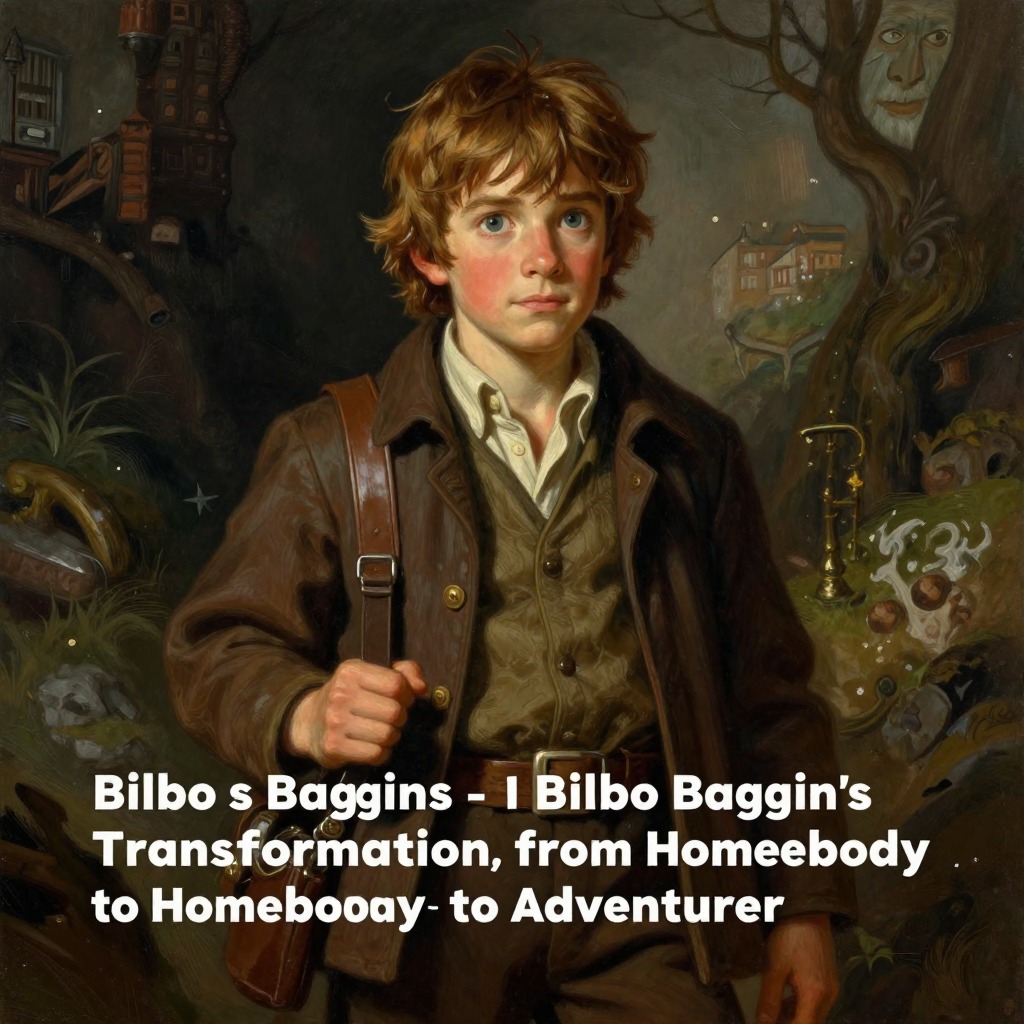
Bilbo Baggins, a comfortable hobbit living in Bag-End, encounters the wizard Gandalf, who proposes an adventure. Bilbo declines, but Gandalf leaves a mysterious mark on his door. This encounter sets the stage for the entire quest, introducing the reluctant hero and the catalyst for his journey.
the following Wednesday afternoon and evening
The Unexpected Party
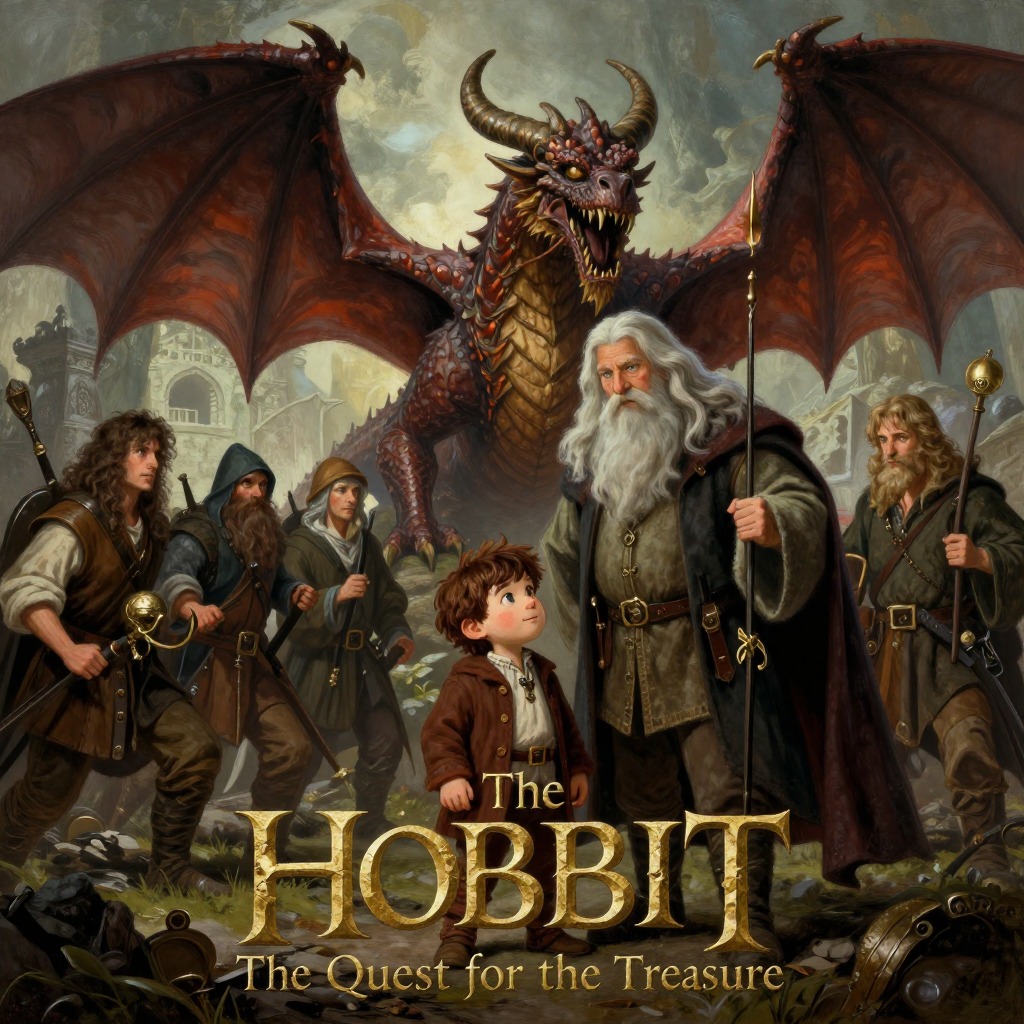
Thirteen dwarves, led by Thorin Oakenshield, arrive uninvited at Bilbo's home for tea. They eat, sing, and reveal their quest to reclaim the Lonely Mountain's treasure from the dragon Smaug. Gandalf presents Thror's Map and a key, and Bilbo is reluctantly recruited as their burglar. The party establishes the company's goal and Bilbo's initial reluctance.
the next morning, early May
The Company Sets Out
Bilbo rushes to join the dwarves at the Green Dragon Inn, leaving without his belongings. Gandalf provides him with a pipe and handkerchiefs. The company rides east on ponies, beginning their journey into the Lone-lands. This marks the official start of the adventure and Bilbo's departure from his comfortable life.
a few days into the journey, at night
Encounter with the Trolls
Lost and hungry, the company spots a light in the woods. Bilbo is sent to investigate and encounters three trolls: William, Bert, and Tom. He is caught trying to pick William's pocket. The dwarves are captured one by one, but Gandalf returns and mimics the trolls' voices, keeping them arguing until dawn turns them to stone. The company is rescued, and they discover the trolls' cave, finding swords and gold.
midsummer, after several days of travel
Rest at Rivendell
Guided by Gandalf, the company finds the hidden valley of Rivendell and the Last Homely House of Elrond. They rest and recover for fourteen days. Elrond reads the moon-letters on Thror's Map, revealing the secret door's opening condition: Durin's Day. He also identifies the swords from the trolls' cave as Orcrist and Glamdring, ancient elf-blades. This provides crucial information for the quest.
after leaving Rivendell, during a thunderstorm in the Misty Mountains
Capture by Goblins
The company takes shelter in a cave during a thunder-battle with stone-giants. Goblins capture them through a hidden crack, taking them deep into Goblin-town. The Great Goblin interrogates them and recognizes Orcrist, ordering their death. This event introduces the goblins as a major threat and separates the company from Gandalf.
immediately after the capture, in the Great Goblin's cavern
Gandalf Kills the Great Goblin
As the Great Goblin prepares to kill Thorin, Gandalf extinguishes the lights and kills the Great Goblin with Glamdring. In the chaos, he leads the dwarves in an escape through the tunnels. The goblins pursue, but Gandalf and Thorin hold them off at a turn. This rescue saves the company and establishes Gandalf's power.
during the escape, in the dark tunnel
Bilbo Finds the Ring
During the flight, Bilbo is knocked unconscious and left behind. He awakens alone in the dark and finds a small gold ring on the tunnel floor. He puts it in his pocket without realizing its significance. This is a pivotal moment, as the ring will become central to his role and the larger legendarium.
after finding the ring, in the tunnels near the underground lake
Riddles in the Dark
Bilbo encounters Gollum, a creature living by an underground lake. They engage in a riddle contest, with Bilbo's life at stake. Bilbo wins by asking 'What have I got in my pocket?' after Gollum fails to guess. Gollum realizes Bilbo has his 'birthday present' (the ring) and attacks. Bilbo escapes by accidentally discovering the ring's power of invisibility. This event deepens Bilbo's character and gives him a crucial tool.
immediately after the riddle game, leading to the Back Door
Escape from the Goblins
Using the ring's invisibility, Bilbo follows Gollum to the Back Door, a passage guarded by goblins. He slips past them and escapes the mountain, losing his buttons in the process. He emerges on the eastern side of the Misty Mountains, alone and lost. This marks his first solo success and the beginning of his transformation.
after escaping, on the eastern slopes of the Misty Mountains
Bilbo Rejoins the Company
Bilbo, still invisible, overhears the dwarves and Gandalf debating whether to rescue him. He reveals himself, surprising them. He tells his story but omits the ring. The dwarves' respect for him grows. Gandalf explains the goblins' new entrance and their escape route. This event solidifies Bilbo's place in the company.
the same evening, in a forest clearing
The Warg Attack
The company is forced to climb trees when a pack of Wargs surrounds them. Gandalf uses fiery pine-cones to drive them back, but the forest catches fire. The goblins arrive, and the situation becomes desperate. This event introduces the Wargs and escalates the danger.
at the height of the Warg attack, at night
Eagles Rescue the Company
As the goblins prepare to burn the dwarves, the Lord of the Eagles and his eagles swoop down, rescuing Gandalf and the dwarves. Bilbo clings to Dori's legs. They are carried to the eagles' eyrie, where they rest and are fed. The eagles then carry them to the Carrock. This rescue saves the company from certain death.
after the eagles' rescue, for several days
Stay with Beorn
Gandalf introduces the company to Beorn, a skin-changer who can transform into a bear. Beorn is initially suspicious but, after hearing their story, provides them with food, lodging, and ponies. He also gives crucial advice about Mirkwood and warns them not to leave the path. This provides a safe haven and essential guidance.
at the edge of Mirkwood, after leaving Beorn's
Gandalf Departs
At the forest's edge, Gandalf announces he must leave for other business. He warns the company again not to leave the path. The dwarves are dismayed, but Bilbo is left as their leader. This marks the beginning of the most dangerous part of the journey without the wizard's protection.
days and weeks after entering Mirkwood
Journey through Mirkwood
The company travels through the dark, oppressive forest. They run out of food and water, and Bombur falls into an enchanted stream, falling into a deep sleep. They are tormented by the forest's eerie atmosphere and the feeling of being watched. This section highlights the forest's dangers and the company's growing desperation.
after several days in Mirkwood, at night
Capture by Wood-elves
Lured by elf-fires, the dwarves are captured by Wood-elves. Thorin is taken separately. Bilbo, wearing the ring, escapes capture and follows them to the Elvenking's Halls. This event separates the company and leads to their imprisonment.
the day after the capture, in the forest
Bilbo Rescues the Dwarves from Spiders
The dwarves, except Thorin, are captured and bound by giant spiders. Bilbo, using the ring and his sword Sting, kills the spider guarding them and leads them in a battle against the spiders. He names his sword Sting. This is Bilbo's first major independent heroic act, earning the dwarves' lasting gratitude.
after the spider battle, for several weeks
Imprisonment in the Elvenking's Halls
The dwarves are imprisoned in the Elvenking's dungeons. Bilbo, invisible, explores the halls, finds Thorin, and learns of a plan to escape via the river. He steals the keys and prepares the dwarves for escape. This period tests Bilbo's patience and resourcefulness.
one night, after weeks of imprisonment
Barrels Out of Bond
Bilbo drugs the guards and hides the dwarves in empty barrels. The barrels are cast into the Forest River, carrying them out of the Elvenking's Halls. Bilbo clings to a barrel, cold and wet. This clever escape frees the company and brings them closer to the Mountain.
after the barrel ride, at dawn
Arrival at Lake-town
The barrels are collected by Lake-men near Lake-town. Bilbo releases the dwarves, and Thorin announces himself as the King under the Mountain. They are welcomed as heroes, given food and shelter, and the town's hopes are raised. This provides a brief respite and resources for the final stage.
after leaving Lake-town, in autumn
Search for the Secret Door
The company travels to the Lonely Mountain and searches for the secret door on its western side. They find it with the help of Fili, Kili, and Bilbo, but cannot open it. They wait, growing despondent. This period of waiting tests their patience and hope.
the last day of autumn, at sunset
Opening of the Secret Door
Bilbo notices a thrush cracking a snail on a stone, reminding him of the moon-letters. As the sun sets on Durin's Day, a ray of light reveals the keyhole. Thorin inserts the key, and the door opens. This fulfills the prophecy and grants access to the Mountain.
immediately after the door opens, at night
Bilbo Takes the Cup
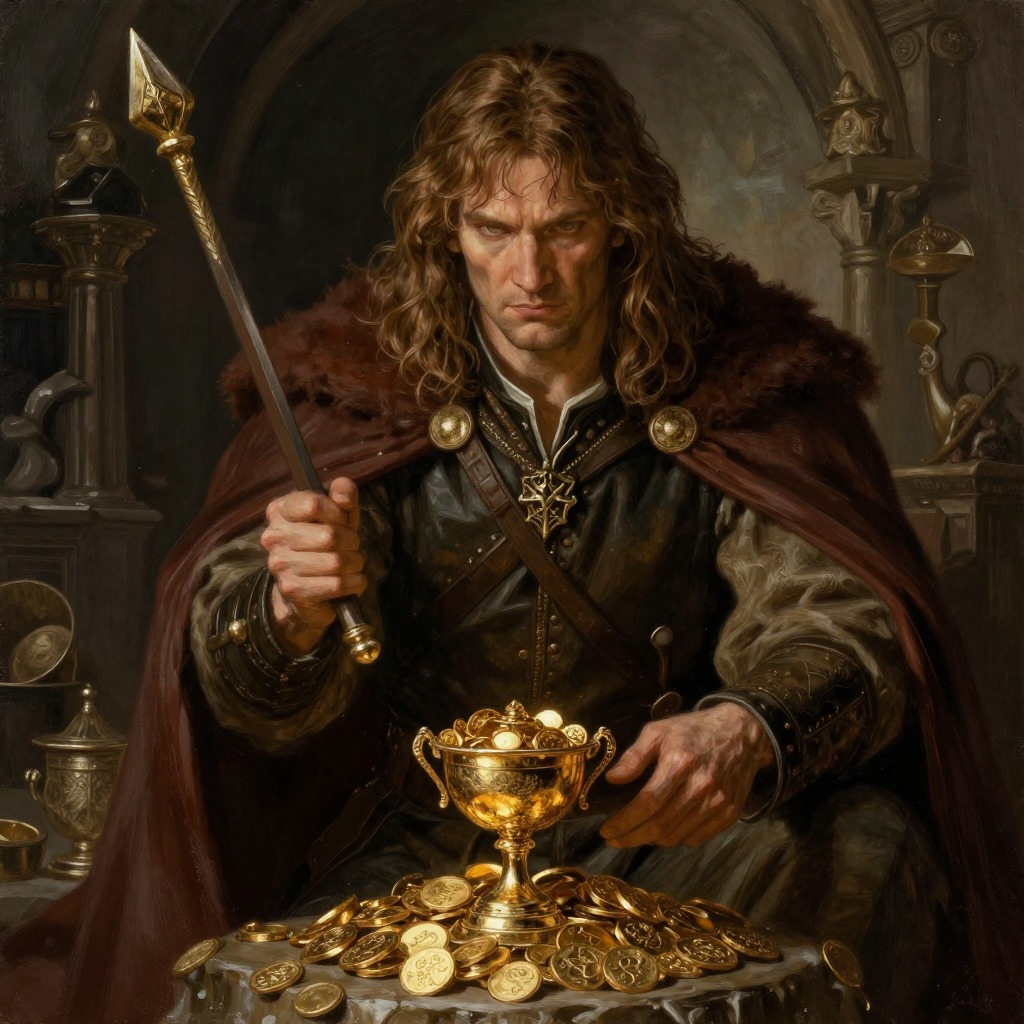
Bilbo enters the tunnel alone, finds the dragon Smaug asleep on a vast treasure hoard, and steals a large two-handled cup. This act awakens Smaug's wrath and sets the final conflict in motion. It is Bilbo's first act of burglary against the dragon.
immediately after the cup is taken, that night
Smaug's Rage
Smaug discovers the theft and flies out of the Mountain in a fury, searching for the thief. He attacks the mountain slopes, forcing the company to hide in the tunnel. The dwarves are terrified, and their ponies are killed or scattered. This demonstrates Smaug's power and the danger they face.
the next day, during a second visit to the dragon's lair
Bilbo's Conversation with Smaug
Bilbo returns to the lair, wearing the ring. Smaug, pretending to sleep, engages him in riddling talk. Bilbo flatters the dragon and discovers a bare patch on Smaug's left breast. He escapes, but Smaug deduces the involvement of Lake-town. This conversation reveals the dragon's weakness and sets the stage for his downfall.
the same night, after the conversation
Smaug Attacks Lake-town
Enraged, Smaug flies to Lake-town and attacks, destroying much of the town with fire. The people flee, and the Master tries to escape. Bard, a descendant of Girion, organizes the defense. This event brings the dragon's wrath upon the innocent and creates a new crisis.
during the attack on Lake-town, at moonrise
Bard Slays Smaug
An old thrush tells Bard of Smaug's bare spot. Bard shoots his last black arrow into the hollow, killing Smaug. The dragon crashes onto the town, destroying it. This is the climax of the dragon threat, achieved through the information Bilbo discovered.
after Smaug's death, for several days
The Siege of the Mountain
Bard and the Elvenking march to the Lonely Mountain to claim a share of the treasure. Thorin, fortified inside, refuses their demands. A siege begins. The dwarves send for Dain's army. This sets up the central conflict of the story's climax.
during the siege, at night
Bilbo Gives the Arkenstone to Bard
Bilbo, hoping to prevent war, sneaks out of the Mountain and gives the Arkenstone to Bard and the Elvenking to use as a bargaining chip. This act of betrayal, though well-intentioned, enrages Thorin. It demonstrates Bilbo's growing wisdom and his prioritization of peace over treasure.
during the battle, after Dain's arrival
Thorin's Sortie
As the Battle of Five Armies begins, Thorin leads a charge from the Mountain, fighting with great fury. He and his company are surrounded. This is Thorin's moment of heroic action, but it leads to his mortal wounding.
during the battle, at a critical moment
The Eagles' Arrival
The Great Eagles of the Misty Mountains arrive, turning the tide of the battle. They attack the goblins from above. This rescue saves the allied forces from defeat.
during the battle, after the eagles
Beorn's Arrival
Beorn, in bear form, arrives and kills Bolg, the goblin leader. This breaks the goblin army and leads to their rout. Beorn's intervention is decisive in securing victory.
after the battle, in the camp
Thorin's Death
Thorin, mortally wounded, reconciles with Bilbo before dying. He acknowledges Bilbo's worth and regrets his earlier harsh words. This is a poignant moment of closure for Thorin's character arc.
after the battle
Thorin's Burial
Thorin is buried deep within the Mountain with the Arkenstone on his chest and Orcrist laid upon his tomb. Dain becomes King under the Mountain. This marks the end of the quest and the beginning of a new era.
after the battle, in late autumn
Bilbo's Return Journey
Bilbo, with Gandalf, begins his journey home. He visits Beorn and stays at Rivendell, learning of the White Council's victory over the Necromancer. He travels through the Lone-lands, recovering the trolls' gold. This journey provides a peaceful epilogue and ties up loose ends.
the following June, a year after his departure
Bilbo's Return to Bag End
Bilbo returns to Hobbiton to find his belongings being auctioned off, as he is presumed dead. He reclaims his home, though his reputation is forever changed. He is no longer considered respectable but is content. This concludes the story with Bilbo's personal transformation and his new life.